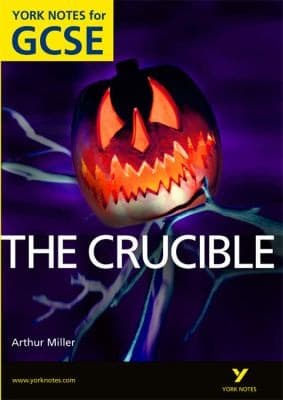
Arthur Miller's play dramatizes the Salem witch trials as an allegory for McCarthyism, following farmer John Proctor's struggle against mass hysteria and false accusations.
Owned
No reviews yet
Owned
Arthur Miller's play dramatizes the Salem witch trials as an allegory for McCarthyism, following farmer John Proctor's struggle against mass hysteria and false accusations.
About
Details
Everything you need to know and do to get the grade you want! In full colour and a great student-friendly size, York Notes for GCSE is easy to use and easy to follow, so it's easier than ever to get top marks. Written by examiners and teachers to give you an expert understanding of the text, York Notes has the most in-depth coverage and analysis of everything from themes and contexts to characters, plots and language. You'll get the low-down on everything you'll need to demonstrate how well you ...
What's Inside
will contain mild spoilers
Romance & sex
AI
Brief mentions of an extramarital affair; no explicit scenes or descriptions. Implied power imbalance in an affair between adult man and teenage girl; no explicit assault depicted.
Violence & gore
AI
Frequent depictions of executions by hanging; one character crushed to death with stones; intense trial scenes with threats of violence.
Profanity
AI
Mild archaic curses and strong language in dialogue; infrequent.
Substance use
AI
Occasional references to alcohol consumption in social settings; not glamorized.
LGBTQ+ Rep.
AI
No LGBTQIA+ representation.
Religious content
AI
Central Puritan Christian themes; clergy-led witch trials, rituals, and religious hysteria define the narrative.
Magic & witchcraft
AI
No evidence found in available sources.
Occult / demonology
AI
Pervasive accusations of witchcraft, occult rituals, and demonology as core plot drivers.
Political content
AI
Allegorical critique of McCarthyism, authoritarianism, and social injustice; explores white Christian male perspectives and systemic biases.
Self-harm / suicide
AI
Brief mentions of despair leading to implied suicidal ideation; no on-page acts.
Abuse & suffering
AI
Depictions of slavery with an enslaved Black woman; false imprisonments, torture, and systemic cruelty in witch trials. Implied power imbalance in an affair between adult man and teenage girl; no explicit assault depicted.
Other
AI
No information found